

Advertisement
euro 2028

Where will EURO 2028 be played?

Discover the nine stadiums that will host UEFA EURO 2028 across the United Kingdom and Ireland, including key venue details and seating capacities.

Dates of Competition

June 9 – July 9, 2028

Full downloadable tournament schedule – click here

Capacity: 88,000

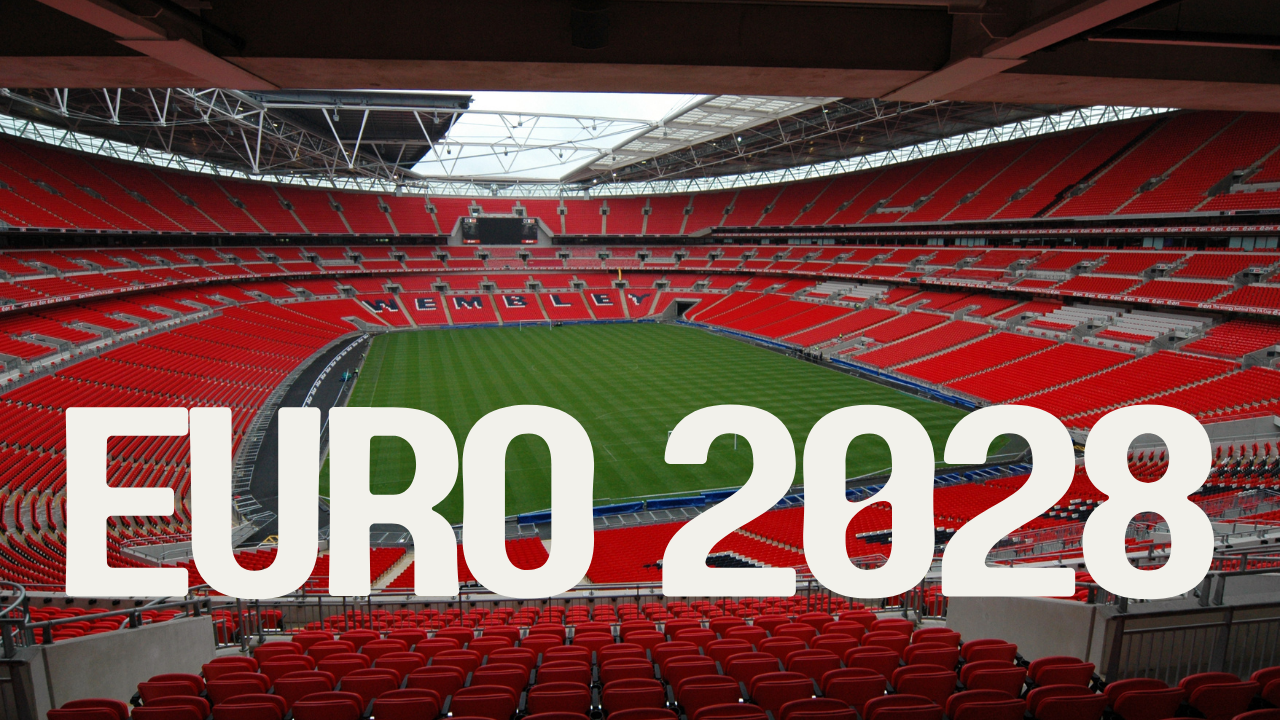
Wembley Stadium is famous for its iconic 440-foot (134-meter) arch, which is the largest unsupported stadium arch in the world and can be seen from miles across London. With a capacity of 88,000, it’s the largest sports stadium in the United Kingdom and has hosted everything from UEFA Champions League finals and UEFA EURO matches to the FA Cup Final, NFL games, and major concerts by some of the world’s biggest artists.

Capacity: 60,000

The second London venue selected for UEFA EURO 2028, Tottenham Hotspur Stadium has become one of the world’s premier sports and entertainment venues since opening in 2019.

Capacity: 73,000

Originally built in 1999 for the Rugby World Cup, the National Stadium of Wales has also become a renowned football venue. It hosted the 2017 UEFA Champions League final, where Real Madrid defeated Juventus 4-1, and served as the home of the FA Cup and League Cup finals from 2001 to 2006 while Wembley Stadium underwent redevelopment.

Capacity: 58,000

Home to Manchester City since 2003, the Manchester City Stadium has become one of England’s premier football venues. It hosted the 2008 UEFA Cup final, where Zenit defeated Rangers 2-0, and has also welcomed major concerts by hometown artists including The Stone Roses and Liam Gallagher.

Capacity: 50,000

The newest of the nine UEFA EURO 2028 venues, Everton Stadium welcomed its first Premier League match in August 2025. Built on the historic Bramley-Moore Dock waterfront, the state-of-the-art stadium features a striking design that is expected to create one of the tournament’s most electric atmospheres.

Capacity: 50,000

Known as the “Cathedral on the Hill,” St James’ Park is celebrated for its electric matchday atmosphere and its iconic location overlooking the heart of Newcastle. The historic stadium hosted three matches during UEFA EURO 1996 and welcomed six football matches at the 2012 Olympic Games, further cementing its place among England’s most celebrated sporting venues.

Capacity: 48,000

Dating back to 1897, Villa Park is one of the United Kingdom’s oldest and most iconic football stadiums. It hosted the final-ever UEFA Cup Winners’ Cup final in 1999, where Lazio defeated Mallorca 2-1, and has staged a record 55 FA Cup semi-finals—more than any other stadium.

Capacity: 51,000

Hampden Park has been the stage for some of UEFA’s most unforgettable matches, including Zinedine Zidane’s legendary volley for Real Madrid in the 2002 UEFA Champions League final against Bayer Leverkusen. More recently, the historic stadium hosted four UEFA EURO 2020 matches, including two featuring Scotland.

Capacity: 50,000

Dublin Arena has hosted two memorable UEFA Europa League finals. Porto claimed a 1-0 victory over Portuguese rivals Braga in the 2011 final, while Atalanta lifted the trophy at the stadium after winning the 2024 final.